We all have this fantasy: trousers that are suitable for the office but as comfortable as working-from-home jogging bottoms.
Bingo! I’ve found them, it’s the Magic Pants! Spotted during my internet browsing, I bought the pattern very quickly after reading reviews and watching videos about it.
(one can never be too careful with AI scams these days)
| ITEM | SHOP | QUANTITY | PRICE |
| Magic Pants Pattern | Ann Tilley Handmade | 1 | €13.70 |
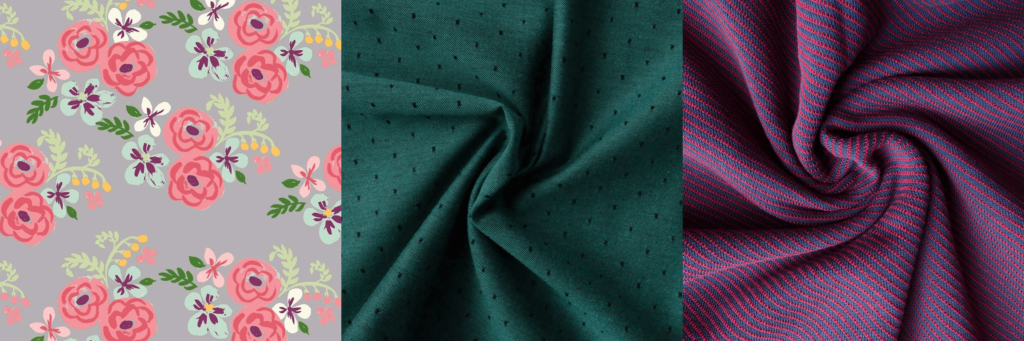
| Red cotton/elastane chino twill | Big mystery? | 1.7 m | ?? € (but at least €15 I think) |
| Classic acetate lining | Tissus de Rêve | 0.25 m | €2 |
| Super stretch sports Lycra | Stash | 0.20 m | €0 |
| Twill tape | Stash | 0.50 m | €0 |
| 5 cm elastic | Stash | 0.30 m | €0 |
| Rectangle rings | La Réserve des Arts | 2 | €0.50 |
| 2 cm press studs | Amazon | 5 | €2.20 |
| Thread | Stash | 0 | €0 |
| Total | €33.40 |
Note: I couldn’t find the shop or the price for the main fabric. Which is both rare and strange. In my head, it was from Tissus de Rêve, but I found no trace of it in my account history.
The Magic Pants Pattern
The Magic Pants is a pattern by Ann Tilley, a textile artist and designer based in North Carolina, USA.
Seemingly active on various fronts, she offers a fairly small selection of patterns. The advantage is that they are completely detached from the trends of the sewing community or ready-to-wear fashion, allowing for more original designs.
The pattern retails at $16 for the PDF version (or $22 for the paper pattern), available in A4/Letter format for home printing, A0 for copy shop printing, and a projector version.
The Concept behind the Magic Pants
The Magic Pants are drop-front trousers (pantalon à pont): a style of trousers for which I have a growing obsession, as this is the second pair I’ve sewn (see my I Am Nout trousers).
This type of trousers is generally associated with naval uniforms. However, the drop-front is a front-fastening system documented as early as the 17th century in breeches, dominating the 18th century until 1850, and was common to both civilian and military clothing.
Its exclusive attribution to the navy or a specific military body is unverified folklore. On the other hand, its gradual replacement by the button fly during the 1840s-1860s is well documented.
Technical Features
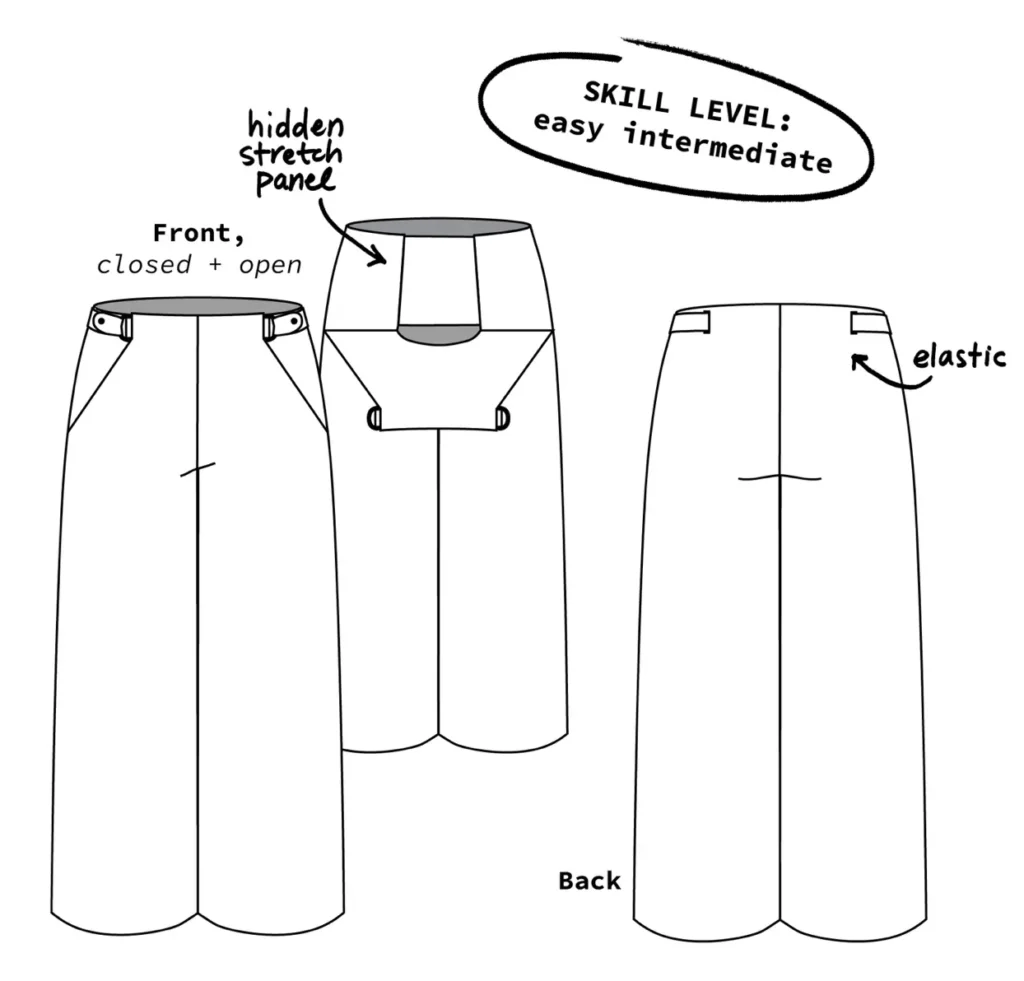
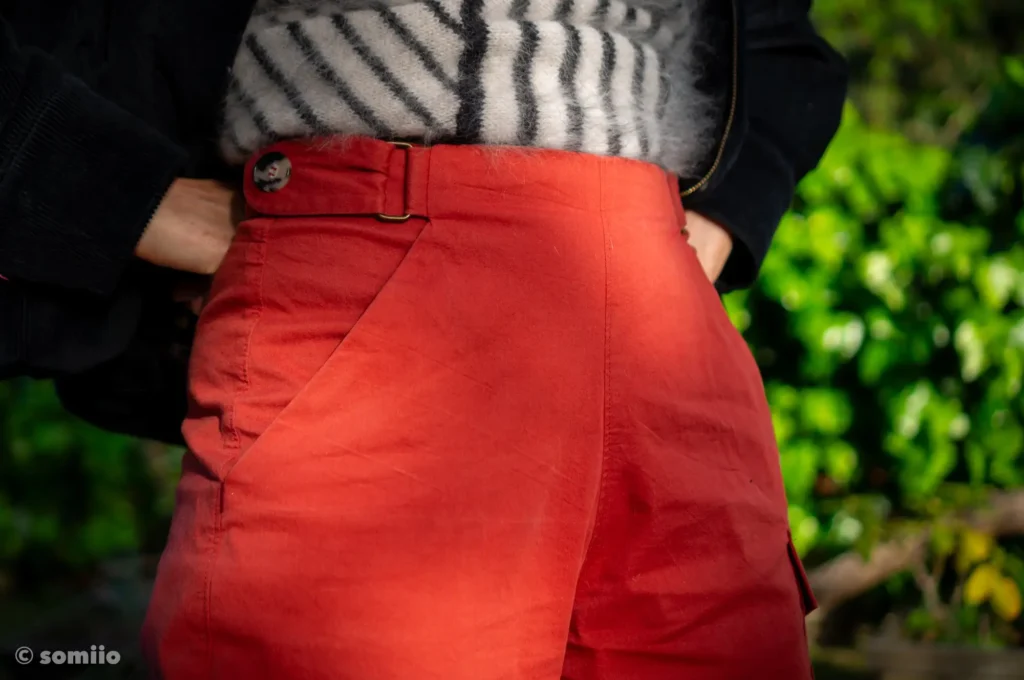
The front opening of drop-front trousers is provided by a wide horizontal flap that folds downwards.
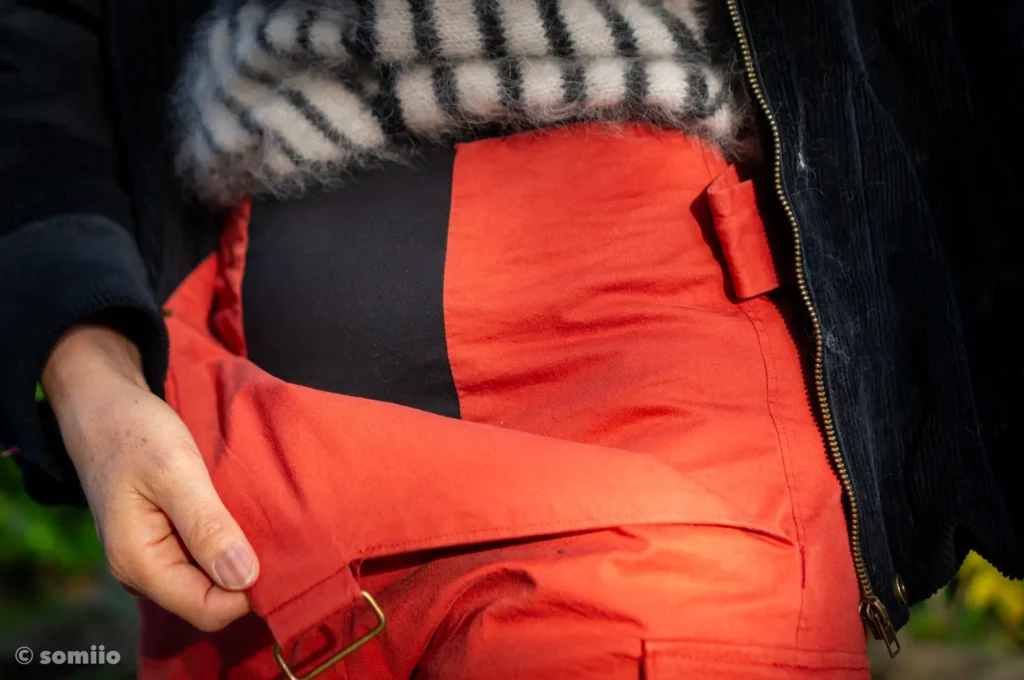
Here, Ann Tilley reinterprets this system with a modern twist: behind this flap hides a stretch fabric panel which:
- allows you to pull the trousers on over your hips without any closure, while keeping a structured silhouette in appearance.
- gently holds in the tummy for a beautifully smooth front.
To this, she adds an adjustable elasticated back system… and presto, “magiiiiiic”.
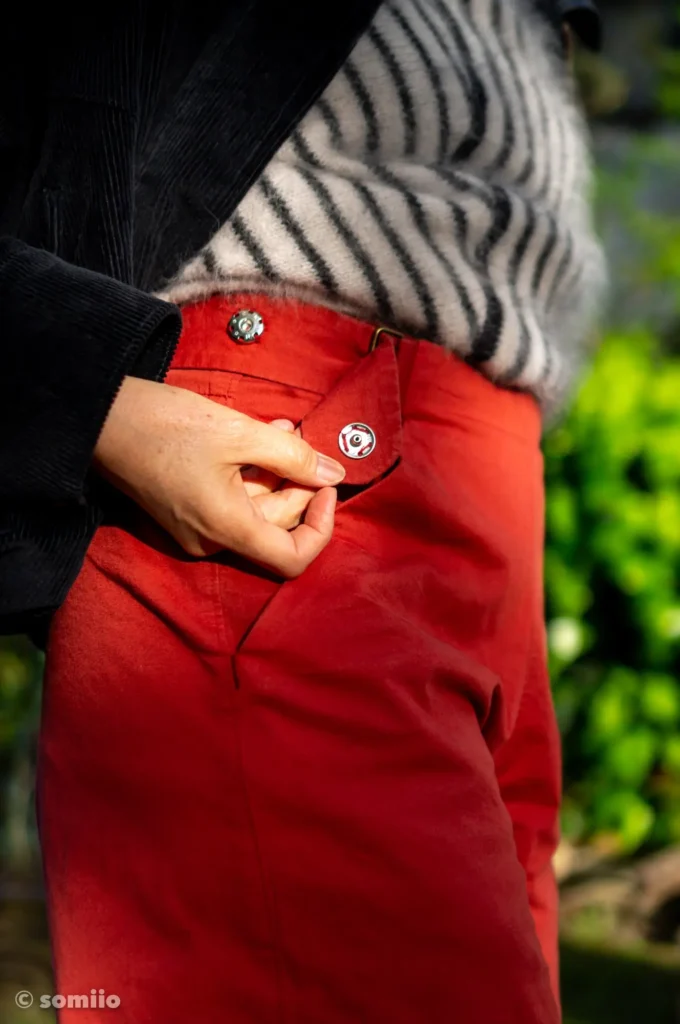
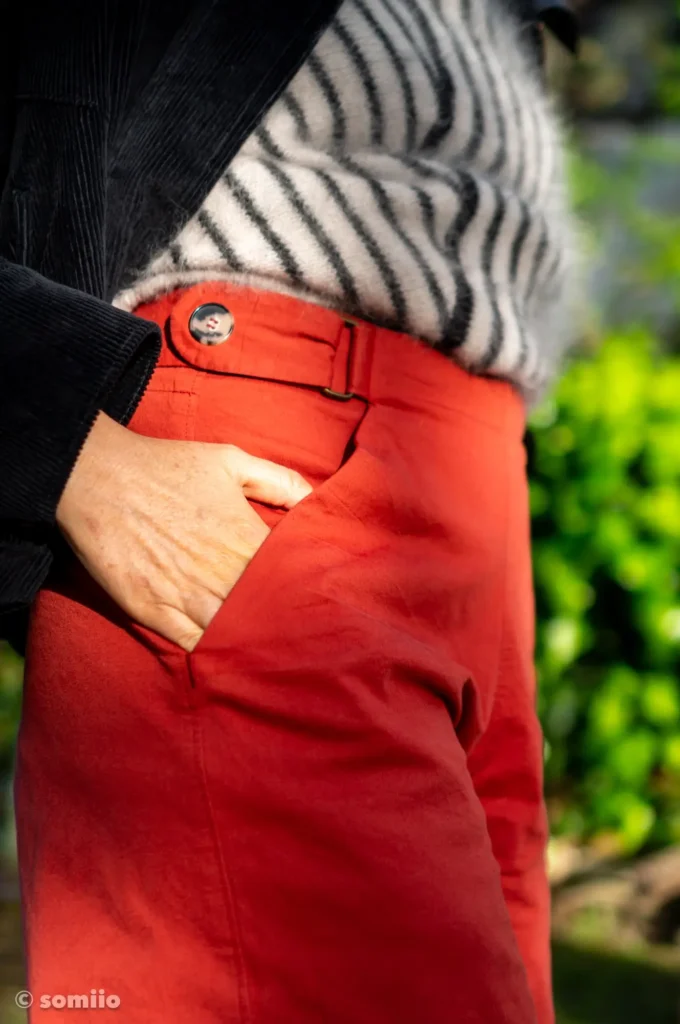
- Main fabric: linen or any light- to mid-weight woven fabric
- Hidden front panel: stretch fabric (ribbing according to the designer, but I wouldn’t recommend it)
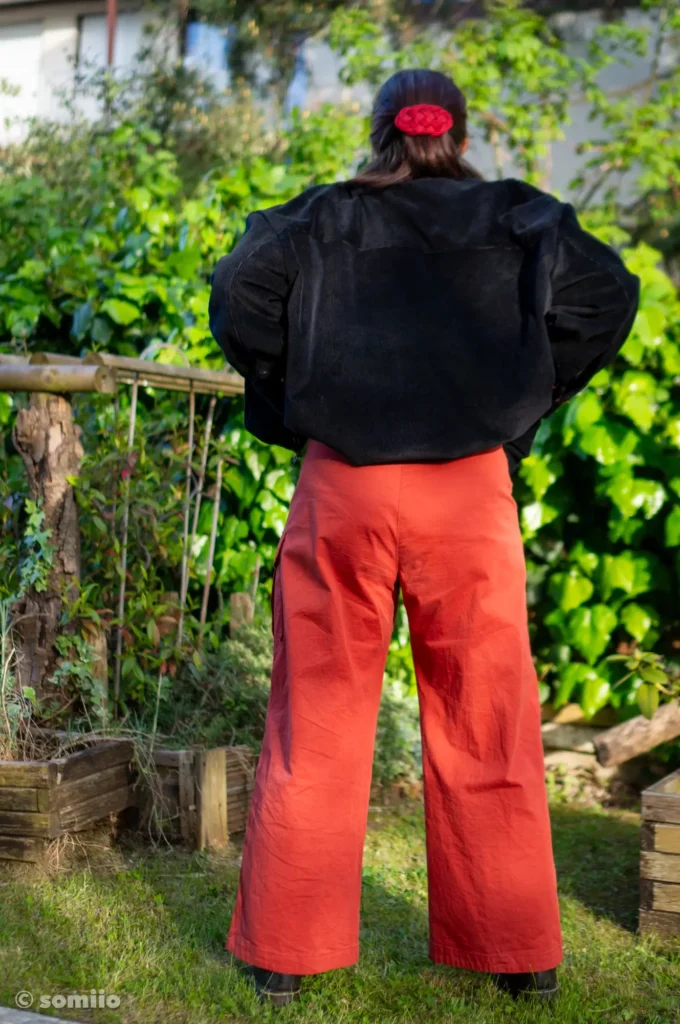
- Back adjustment system: the back is pulled in by an elastic band, the ends of which come out as tightening tabs
- Deep slant pockets built into the flap
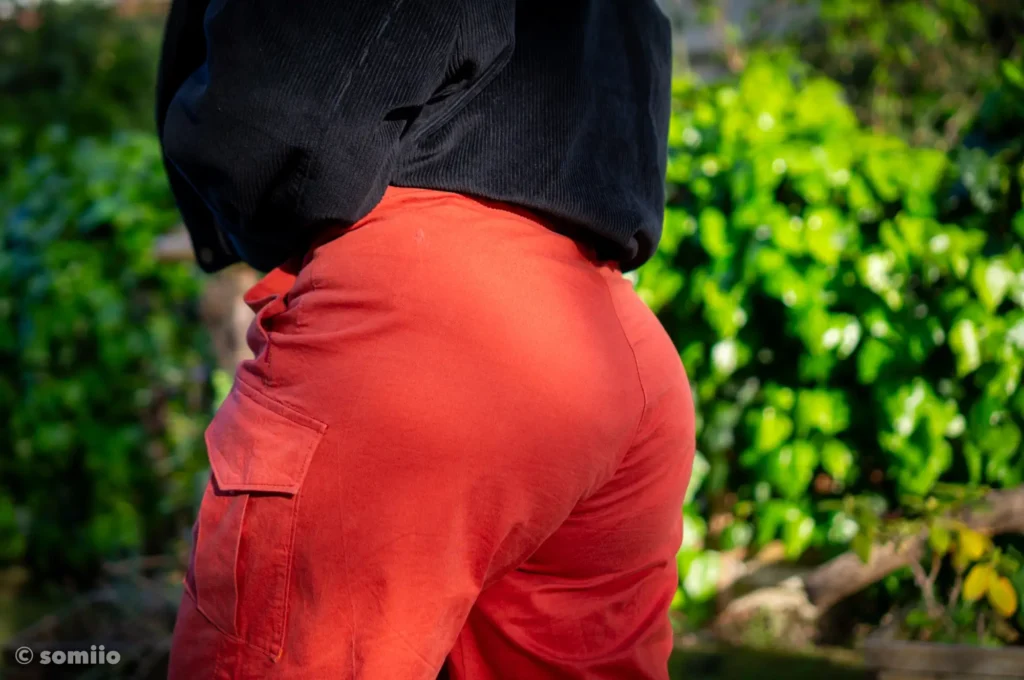
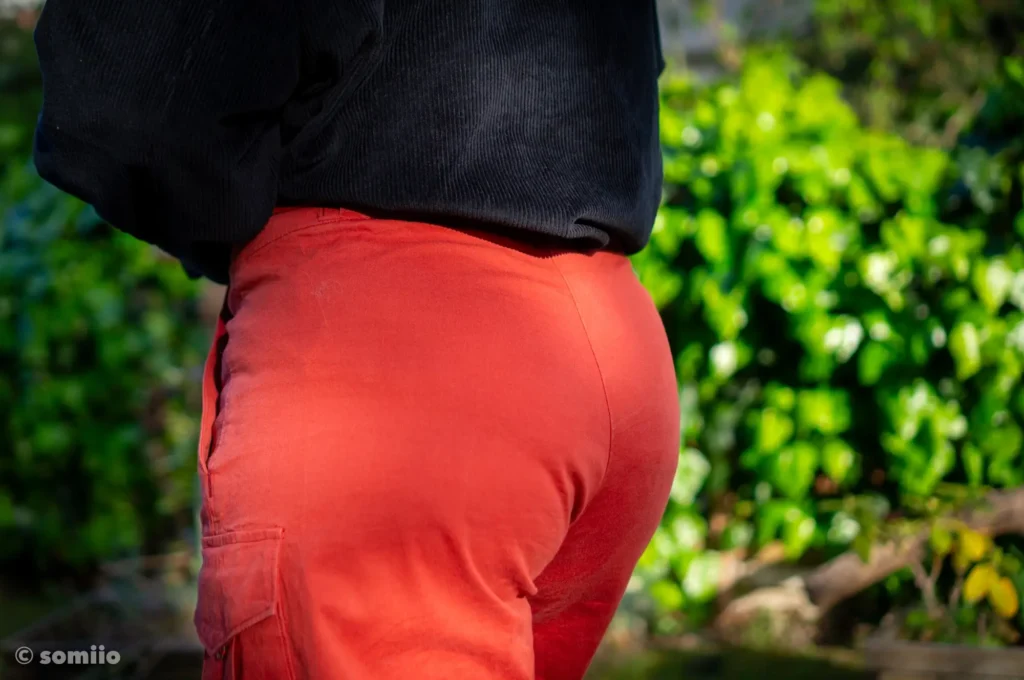
The combination of the front panel + elasticated back waistband + adjustment tabs is truly the ultimate combo.
A Word on the Instructions
Honestly, it’s a great job. The step-by-step instructions are clear, well-illustrated and fully documented. On top of that, Ann Tilley offers several online videos: step-by-step tutorials, a video dedicated to pattern adjustments, different leg styles options, etc.
You can also find several Sew-Along videos on YouTube from other intrigued sewists.
Sewing the Magic Pants
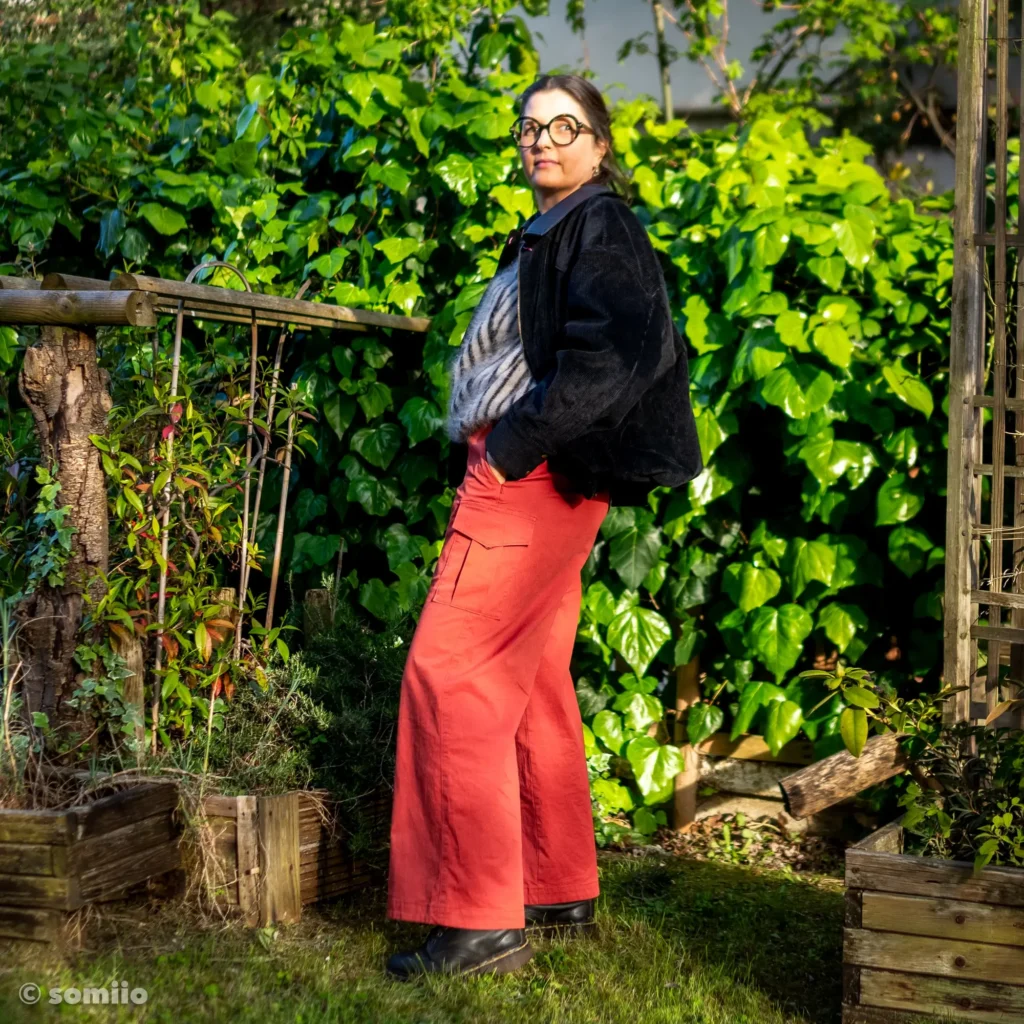
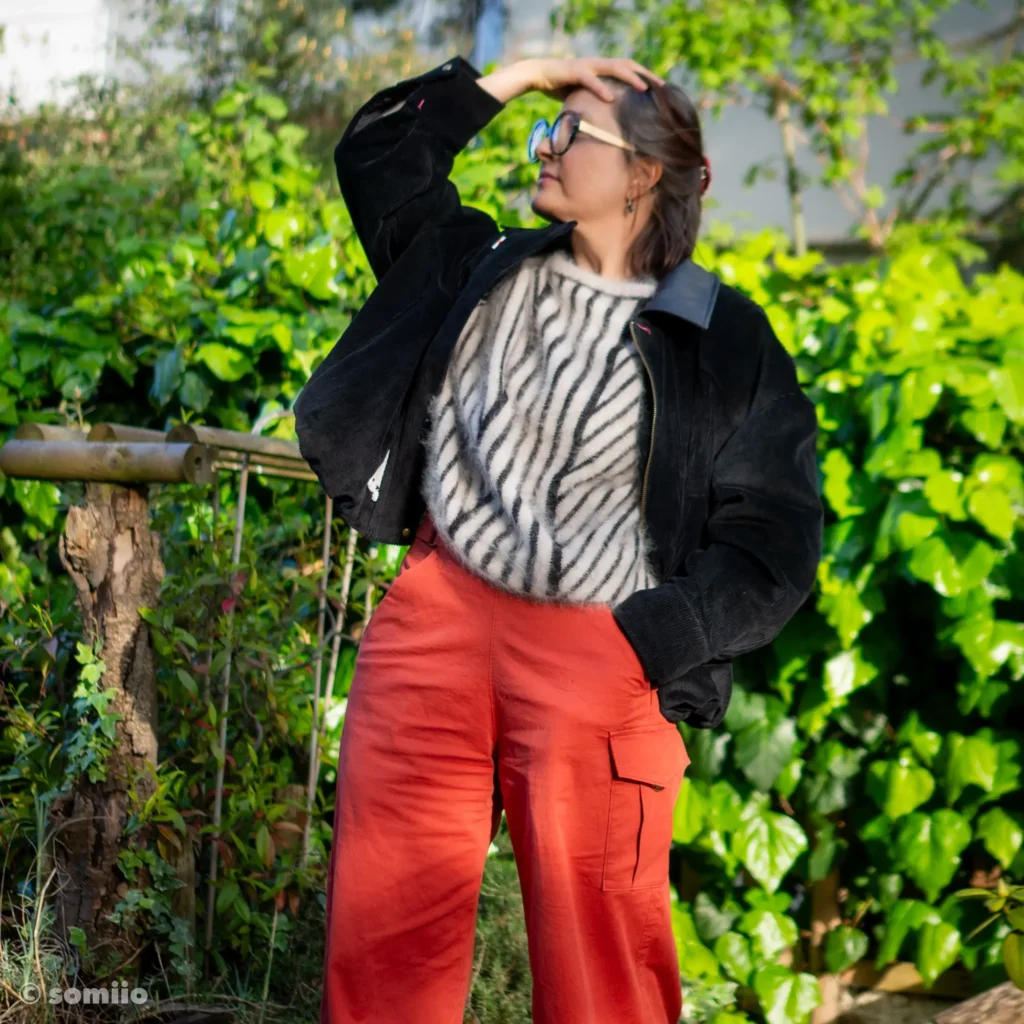
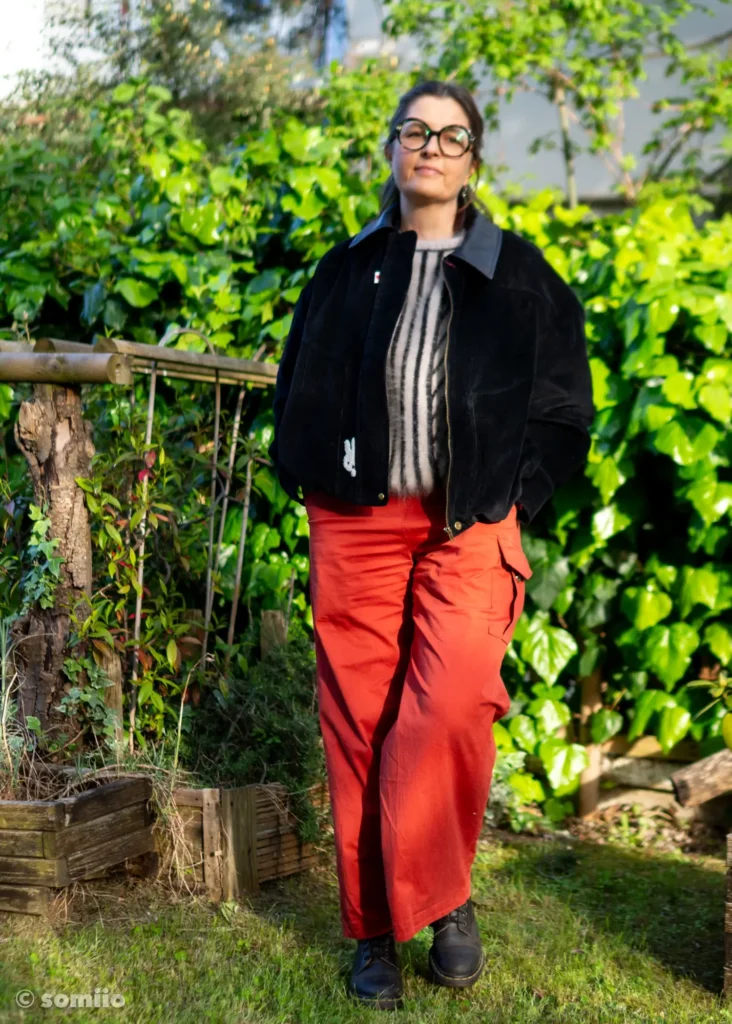
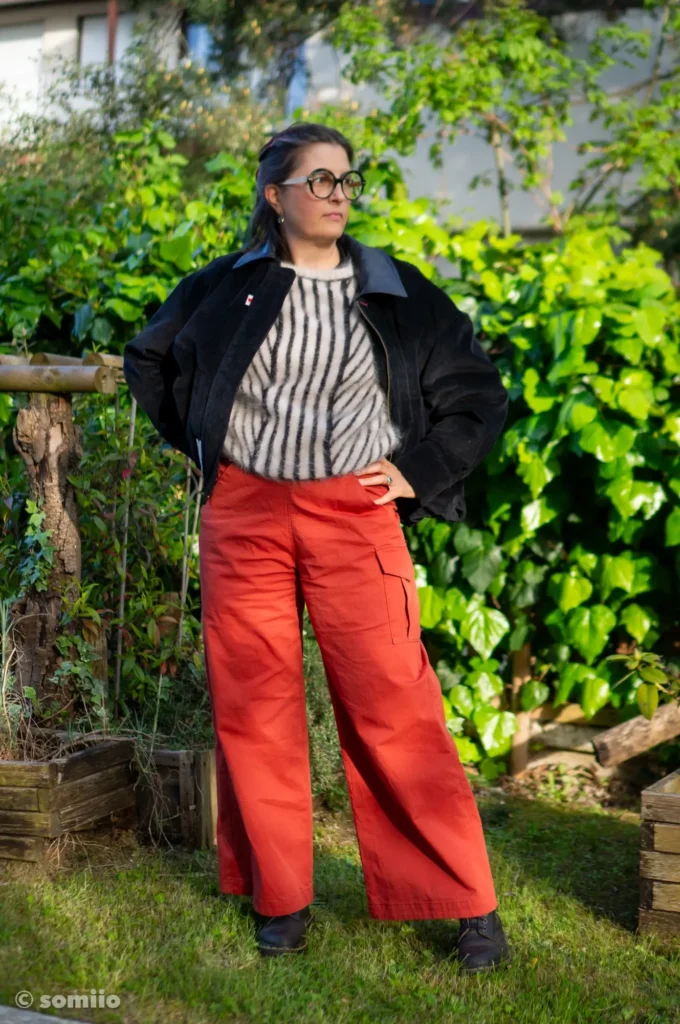
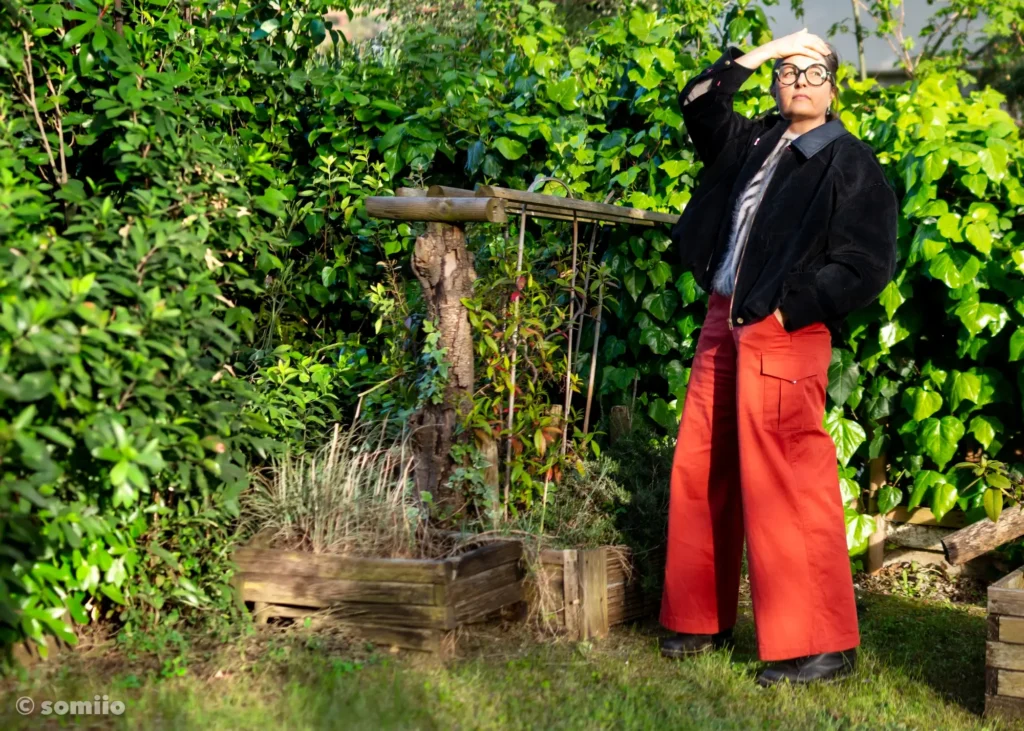
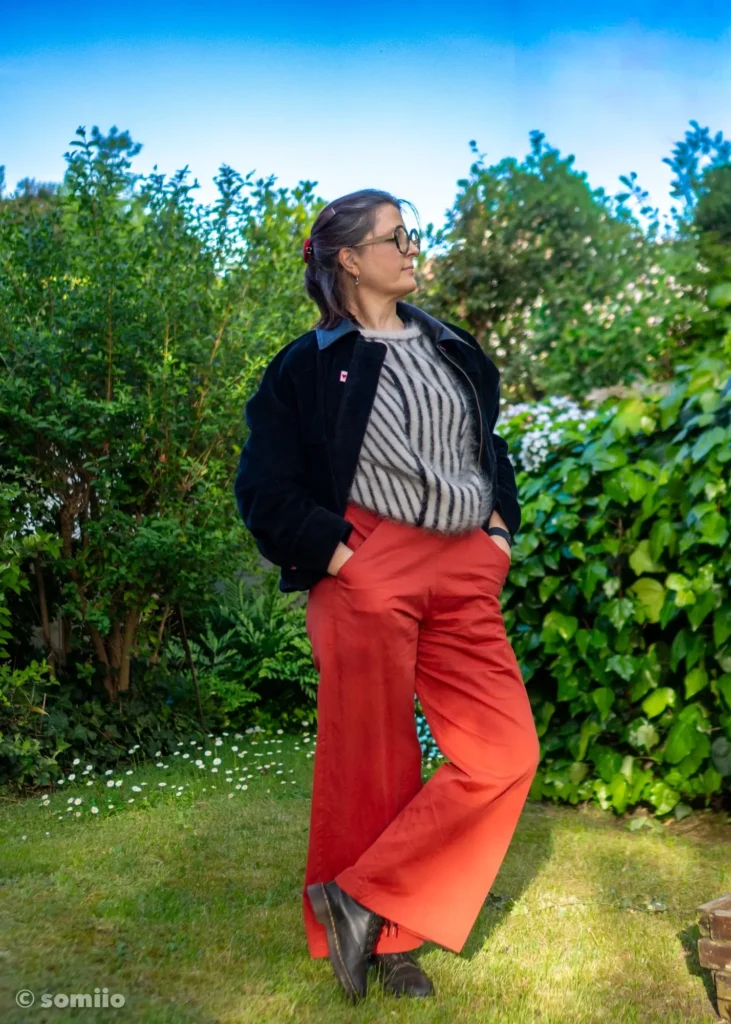
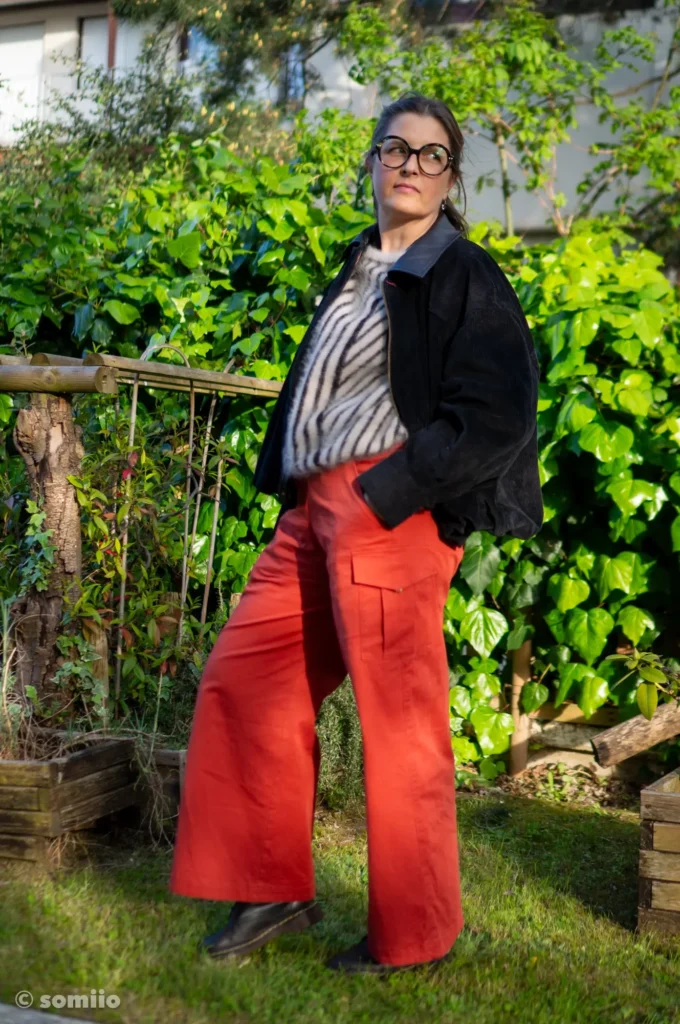
I sewed these trousers in a red cotton/elastane twill in size M without making any adjustments… but not without modifications, obviously!
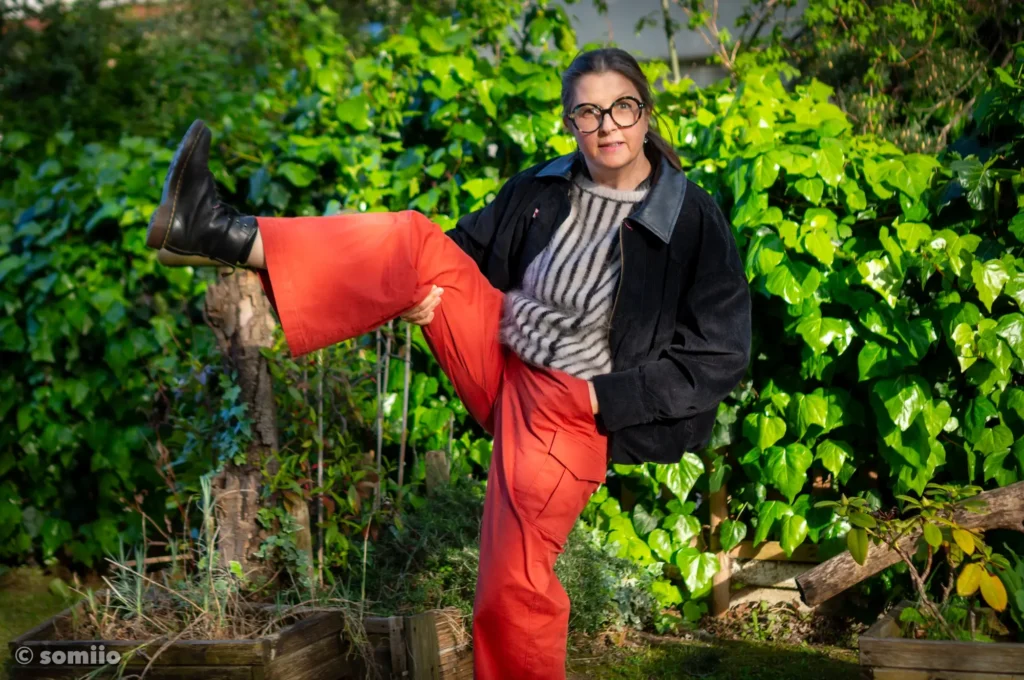
Between the construction designed for comfort and my elastane fabric, this pattern is incredibly comfortable.
The Modification: Cargo Pocket
I added a cargo pocket on the left side because I really wanted… cargo trousers.
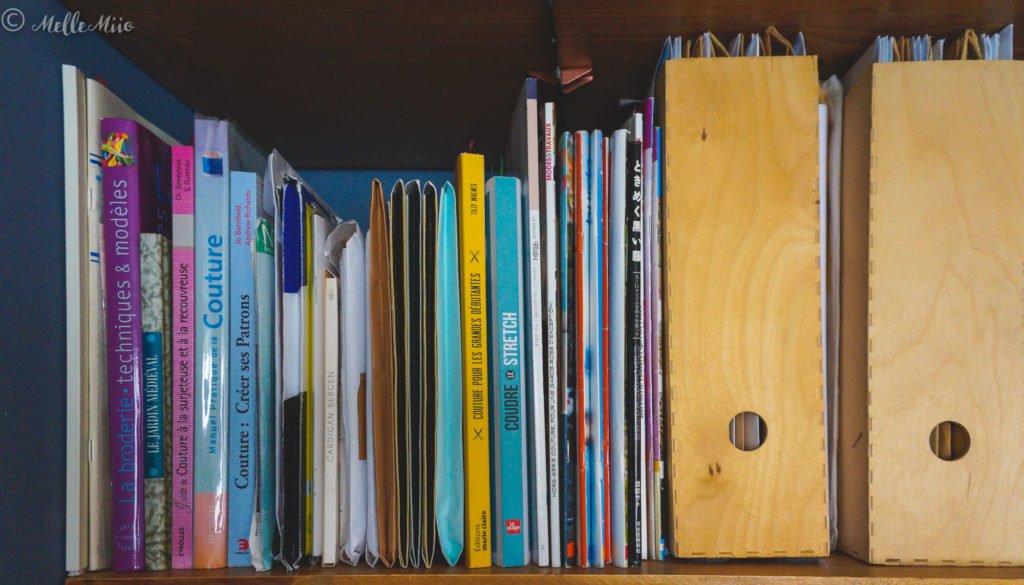
To design this pocket, I used the very interesting book “Détails de mode à la loupe : les poches” by Claire Wargnier published by Esmod, gifted by my sister ❤️
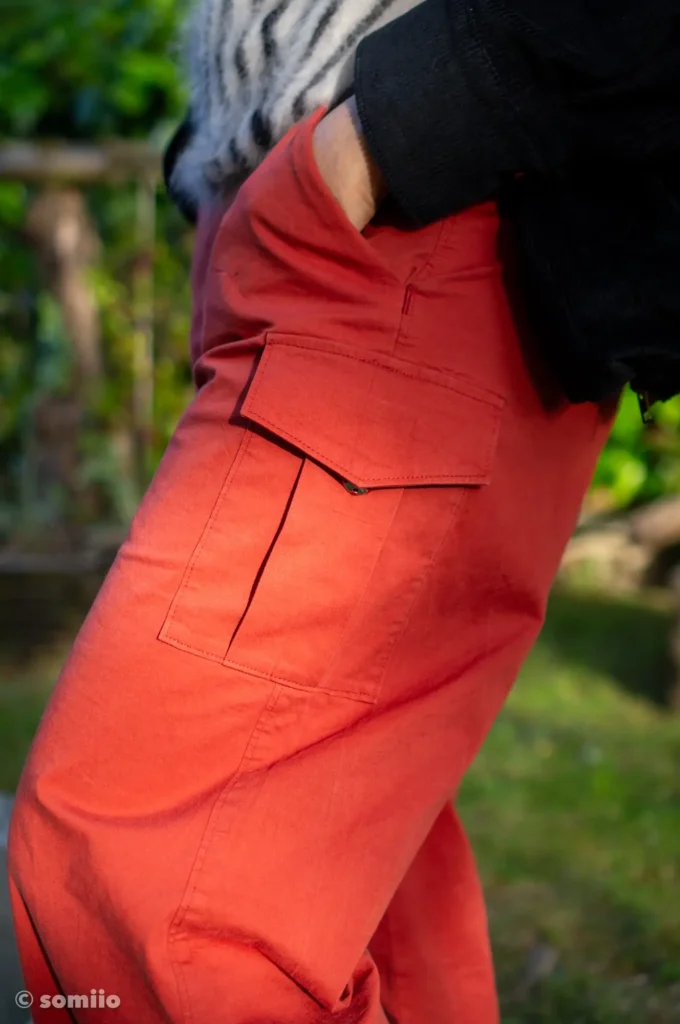
It’s doable, but careful: the pocket bags for the slant pockets are very deep (which is both inherent to drop-front trousers and very cool).
I had to perform some acrobatics during assembly to avoid sewing the bottom of the front left pocket together with the cargo pocket. If you attempt the same modification, make sure to map out your pockets carefully before cutting.
Choosing Fabric for the Front Panel
The designer recommends ribbing. I’ll be direct: I think it’s a bad idea.
This panel is going to be subjected to high tension every time you put the trousers on. Especially if you have a significant difference between your hips and/or bottom and your waist. For me, it’s 27–30 cm. It is indeed this panel that stretches to get the trousers over the hips.
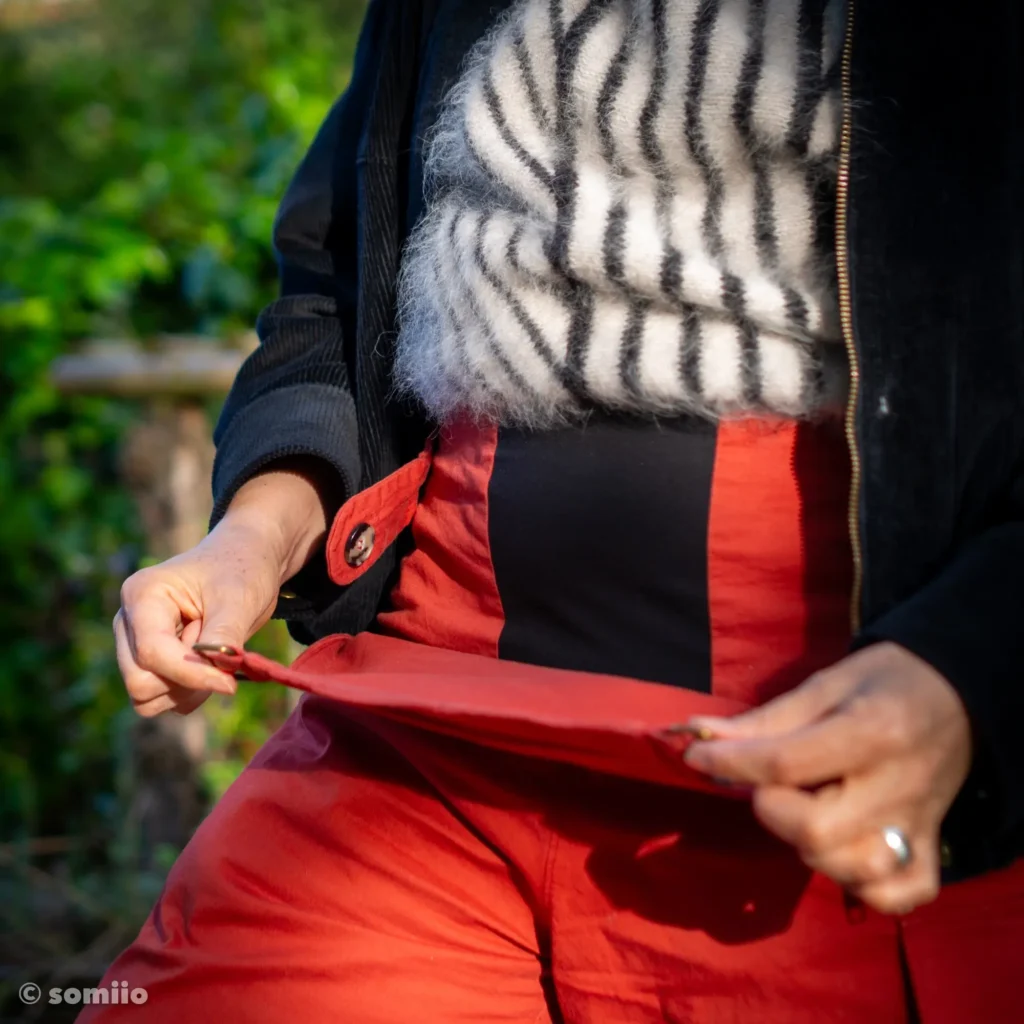
What we’re looking for here is not just stretch, it’s elasticity (or recovery): meaning the fabric’s ability to spring perfectly back into shape after being heavily stretched.
However, ribbing tends to lose its shape gradually under repeated high tension, and doesn’t fully regain its initial shape. Who hasn’t ended up with stretched-out cuffs on their favourite sweatshirt?
So, after exploring my stash, I opted for a black sports/swimwear Lycra from Mercerie Extra. Its snappy, super-stretch material snaps back perfectly into shape after every wear. I highly recommend going in this direction.
The Snags
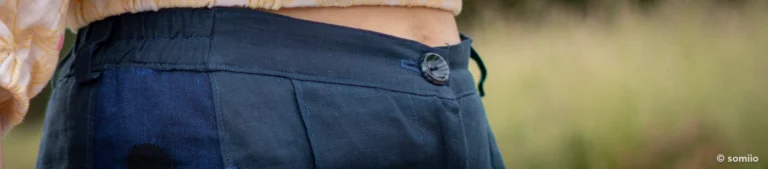
I just have one issue with sewing the sew-on press studs: the threads get sheared and the buttons quickly come undone. I actually lost one just during the photo shoot.
If you have the right technique or the right thread, I’m all ears!
Conclusion: Does the Magic Work?
Yes!
These trousers are probably one of the most comfortable pairs I’ve ever sewn. No pressure on the stomach, no elasticated waistband cutting in after lunch, and yet a structured and elegant silhouette.
Plus, you can adjust how tight they are thanks to the waistband tabs, which add a very classy design feature.
What I Would Do Differently
- Keep or extend the leg length, which is just about right for my 1.60 m height
- Potentially play around with the leg shape: the designer provides techniques to alter the leg shape to make them straighter or more tapered
Will I sew them again? Yes, definitely.
What about you, have you ever sewn trousers with a hidden “secret” inside? Let me know in the comments — I’m curious to discover other hidden gems! 😄